


Fresh juice business
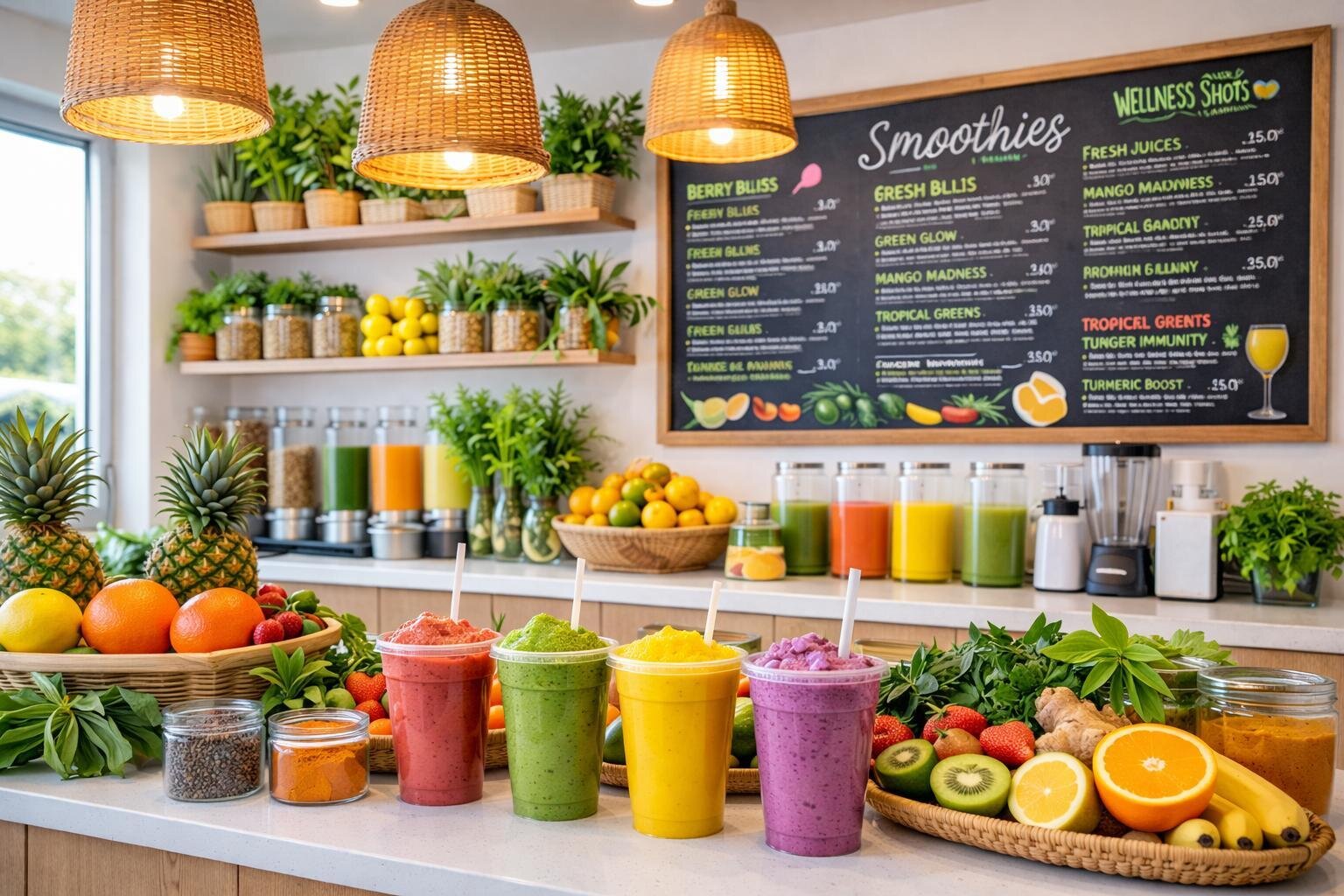
Juice Factory brings fresh juices and healthy fast food to busy urban locations, offering franchise partners a scalable business concept.

In this article you will learn
- The business model behind Austria's Juice Factory healthy food concept.
- The different store formats available to potential franchise partners.
- The steps involved in joining the franchise network.
- The investment categories and ongoing costs of running an outlet.
- The training, operational assistance and growth opportunities offered by the company.
Founded in Vienna in 2012, Juice Factory is an Austrian company specialising in freshly prepared juices, smoothies, açaí bowls and convenient healthy food. Its menu also includes porridge, sandwiches, protein shakes, iced matcha and coffee. The brand focuses on freshness, high-quality ingredients, efficient service and a modern urban lifestyle.
What makes the franchise distinctive is its combination of a relatively compact operating model and a diverse product range. Recipes are carefully costed, suppliers are selected according to quality standards and daily operations are organised around clear procedures. The concept does not require a professional chef or complex kitchen ventilation, which can make it suitable for locations with high customer traffic.
The company currently operates five outlets, all in Vienna: three in the city and two at Vienna International Airport. Its locations include shopping and business areas, university surroundings and airport terminals. Juice Factory is now actively seeking franchise partners to introduce the brand to new cities and markets.
Becoming a franchise partner
The company is looking for entrepreneurs who are commercially minded, able to manage and motivate employees and willing to follow established operating standards. Previous experience in hospitality can be an advantage, but it is not essential. Juice Factory particularly welcomes partners interested in developing several locations over the long term.
The recruitment process begins with an initial conversation and the signing of a non-disclosure agreement. Candidates then receive a franchise prospectus and take part in a more detailed presentation. The next stages include a letter of intent, market and location assessment, site approval, contract signing, store preparation and staff training. The process concludes with a soft opening and the official launch.
The investment required depends on the country and the selected store format. Juice Factory offers three options: a traditional inline store measuring 50–120 square metres, a compact kiosk of 20–40 square metres and a food court unit of 30–60 square metres. The total investment includes the franchise entry fee, fit-out, furnishings, equipment, IT systems, point-of-sale technology and digital signage. However, the company does not publish fixed investment amounts. Detailed figures are provided in the franchise prospectus after the initial contact.
Ongoing costs include a franchise fee and a contribution to the marketing fund. Their exact amounts and payment structure are not publicly disclosed. Prospective partners must therefore obtain the financial details directly from the franchisor before making an investment decision.
Support and growth opportunities
Juice Factory provides support throughout the entire process of establishing a new outlet. Before opening, franchisees receive assistance with site analysis, store layout and design, investment planning and the preparation of the premises. The franchisor also provides staff training and helps prepare the marketing activities required for the launch. During the opening period, partners benefit from on-site assistance, operational training and quality checks.
After the business begins operating, support continues through field visits, regular store audits, marketing campaigns, product updates and annual planning meetings based on key performance indicators. The aim is to maintain consistent standards across the network while helping individual outlets improve their commercial performance.
Franchisees are responsible for the daily management of their businesses, including staff recruitment and supervision, customer service, product quality, stock management, cost control and compliance with the brand's operating procedures. They must also maintain food safety standards and implement the company's marketing and service guidelines.
The company does not publish specific revenue forecasts, average turnover figures or profitability guarantees. Actual financial performance will depend on factors such as location, customer traffic, operating costs, opening hours and the effectiveness of local management. Its focus on carefully calculated recipes and streamlined operations is intended to support cost control, but potential franchisees should request detailed financial projections before signing an agreement.
Juice Factory's stated development objective is to take its established Viennese concept to new cities. The franchise programme is designed to support expansion through different store formats, allowing the brand to enter shopping centres, transport hubs, business districts and other high-traffic locations. The company has not publicly announced a specific number of planned openings or confirmed international franchise markets.
Main conclusions
- 2012 – The year Juice Factory was founded in Vienna.
- 5 outlets – The company's current locations in Vienna, including the airport.
- 3 formats – Traditional stores, compact kiosks and food court units.
- 50–120 sqm – The available size range for traditional stores.
- International expansion – The company is seeking franchise partners to enter new markets


Shopping cart
Added to your shopping cart






Other concepts from sector food and beverage

Breaking news
Show all
Creative entertainment
THE ART OF FUN is a creative entertainment franchise combining art, social experiences and interactive workshops, with opportunities for...

Self-portrait studios
PhotoSpace is changing traditional photography with self-service studios, allowing customers to create professional portraits independently...
Turkish street food
GOKOREC brings authentic Turkish street food to European customers through a distinctive franchise concept combining traditional recipes with...

Senior care
Petits-fils is a French home-care franchise helping older people maintain independence through personalised assistance, professional caregivers...