





























Next Engineers - a global STEAM Education

Innovative STEAM education franchise empowering children through hands-on engineering learning, combining structured curricula with scalable international growth potential.

In this article you will learn
-
Overview of the company’s engineering education model and how the business operates in different markets.
-
Clear explanation of entry requirements, startup capital range from USD 45,000 to USD 220,000, and ongoing royalty structure.
-
Information about the global presence, number of operating locations, and territorial development options.
-
Details on operational duties, franchisor training package, and system support for new partners.
-
Insight into revenue sources, income structure, and international expansion plans, including potential growth in Poland.
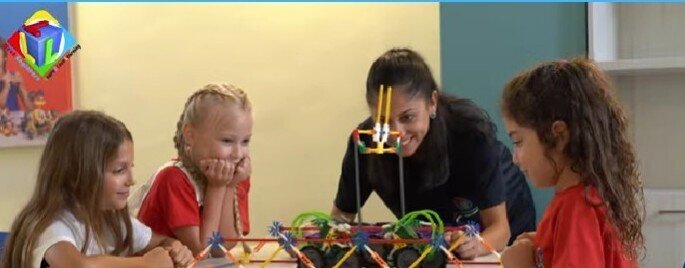
Next Engineers is an international education concept focused on STEAM programs (Science, Technology, Engineering, Arts, Mathematics) for children and teenagers. The company delivers structured, project-based engineering curricula through workshops, after-school programs, camps, and dedicated learning centers. The concept integrates standardized teaching materials, operational systems, and brand positioning with a locally operated business model.
The franchise operates in approximately 16 locations worldwide across North America, Europe, Africa, and Asia. The network continues to develop through single-unit franchisees and master franchise agreements covering larger territories. The brand combines educational impact programming with a commercially structured franchise format.
The franchise is positioned as a hybrid model that can function either as a community-based service delivered in schools and partner venues or as a fixed learning and experience center operated from dedicated premises. This flexibility differentiates the model in markets with varying levels of capital availability.
Franchise requirements, investment and fees
To become a franchisee, candidates complete an application and approval process, followed by signing a franchise agreement and securing a defined territory. The franchisor requires operational involvement, local market development capability, and alignment with the educational mission of the brand. Master franchise opportunities are available for investors prepared to scale multiple units within a country.
The financial commitment depends on the chosen model. For a community-based franchise format, the minimum total investment starts at approximately USD 45,000. For a full learning and experience center, the total investment can reach approximately USD 220,000, including fit-out, equipment, training, and working capital.
Ongoing fees include a royalty typically structured at approximately 10% of gross revenue or a fixed fee of around USD 500 per month, depending on territory and agreement structure. Additional contributions may apply for marketing and system development.
Franchisees are responsible for local marketing, partnerships with schools and institutions, program delivery or staff supervision, recruitment and training of instructors, financial management, and compliance with operational standards set by the franchisor.
Support, revenue potential and expansion plans
The franchisor provides initial training covering curriculum delivery, operations, sales processes, and marketing systems. Franchisees receive access to proprietary lesson plans, educational materials, operational manuals, branding assets, and ongoing business guidance. Support includes onboarding assistance, periodic performance reviews, and network knowledge sharing.
Revenue is generated through multiple streams, including recurring classes, school contracts, workshops, camps, birthday events, and special thematic programs. Income potential depends on territory size, pricing strategy, and enrollment capacity. In established markets, a fully operational center with strong enrollment can generate recurring monthly revenue from diversified program offerings. Profitability depends on staffing structure and facility costs.
The company continues to expand internationally through new franchise agreements and master franchise partnerships. Growth is focused on Europe, Asia, and emerging education markets. While educational initiatives connected to the brand have been implemented in Poland through partnerships, there is currently no fully established commercial franchise network in the country. Expansion into Poland remains a potential future opportunity within the European development strategy.
Main conclusions
-
The franchise operates in approximately 16 international locations, indicating an early-stage but structured global network.
-
Entry investment ranges from USD 45,000 (community-based model) to USD 220,000 (full learning center), showing two scalable entry paths.
-
Ongoing royalty is around 10% of gross revenue or approximately USD 500 monthly, depending on the agreement structure.
-
The model is based on diversified revenue streams, including classes, school contracts, workshops, and camps, reducing reliance on a single income source.
-
Expansion strategy focuses on new European markets, with Poland identified as a potential future development territory.

Shopping cart
Added to your shopping cart

Featured franchises
No featured franchises

Other concepts from sector education

Edukido
Educational programs with Lego
 €5,600
International Kids Academy
Day care for children
€10,000

Scientific kitchnette
Educational programs for kids
€8,000

Speed Reading and Smart Learning School
Educational programs for kids
€5,000

Verbatoria
Talent testing using neurofeedback
€6,900
Young Engineers
Educational programs for kids
€1,500

IQ UP!
Children's mind development courses
€5,000
Breaking news
Show all
Diverse franchise expansion strategy
Diverse develops its franchise network through standardized retail operations, local market adaptation and selective international growth.

Cache Cache
A women’s fashion retail franchise combining fast product rotation, accessible pricing, and standardized store operations across international...
French taco boom
A fast-growing quick service brand built on customizable French tacos, strong unit economics, and scalable franchise expansion across...
EatHappy Sushi
A scalable retail-based sushi concept integrated into supermarkets, combining high foot traffic, efficient operations, and consistent product...